The Ultimate Guide to Choosing an SEO Keyword Database in the AI Era
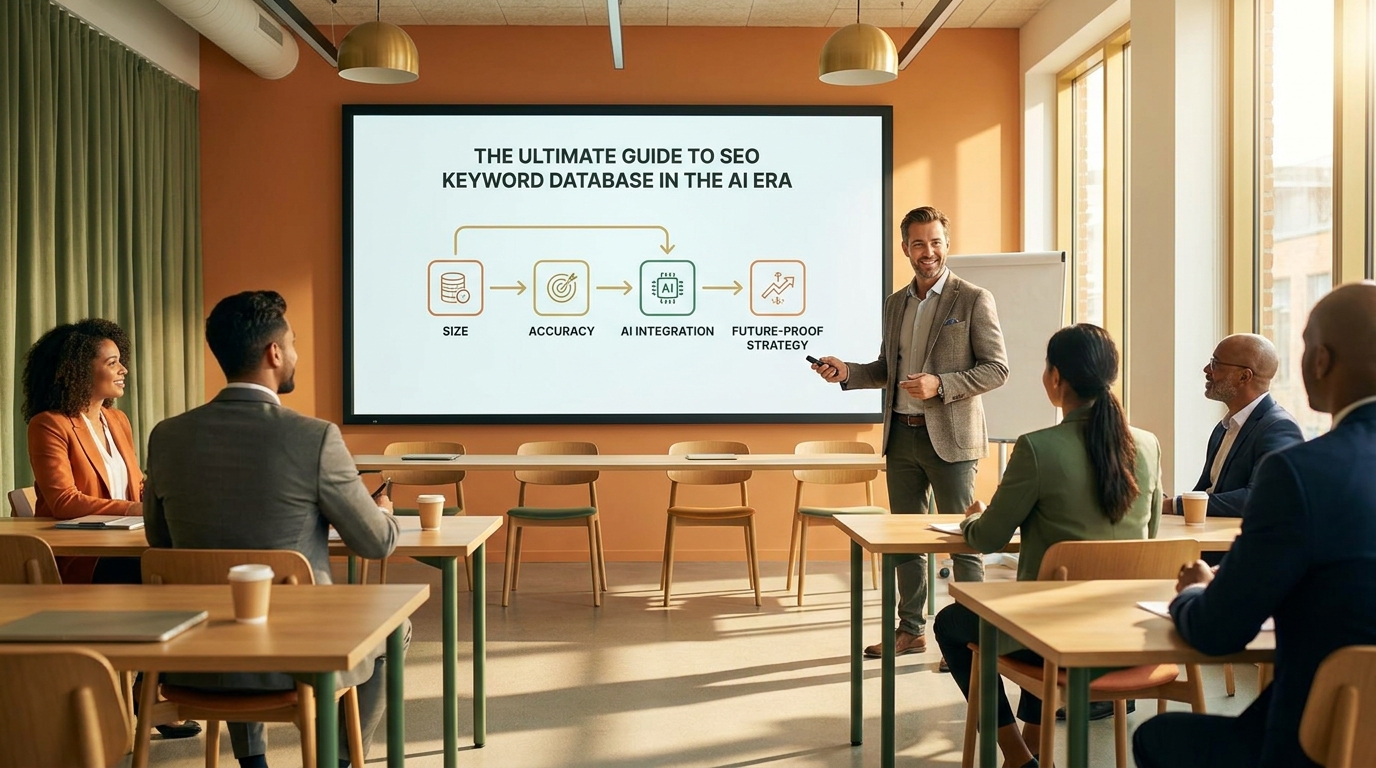
In the age of generative AI, the foundation of successful SEO remains high-quality data. This guide explores how to evaluate an SEO keyword database based on size, accuracy, and AI integration to future-proof your organic strategy.
What is an SEO Keyword Database?
At its core, an seo keyword database is a massive, highly structured repository of search queries utilized by digital marketing infrastructure to understand user intent, gauge market demand, and prioritize content creation. Rather than relying on guesswork, these databases provide quantitative metrics—such as monthly search volume, competition difficulty, and click-through rates—allowing marketers to align their web properties with the exact phrases users are typing into search engines.
There is a significant difference between subscribing to a standard SaaS tool and choosing to buy keyword database access via API or raw data dumps. A SaaS dashboard provides a user-friendly interface tailored for individual webmasters, but it often restricts the volume of data you can extract. In contrast, enterprise SEO requires scalable database solutions over manual research. When a corporation opts for raw data dumps or programmatic API integrations, they can power internal dashboards, feed massive programmatic SEO builds, and cross-reference millions of search queries with proprietary sales data. This scalability is critical for organizations looking to capture zero-volume search anomalies before competitors do.
The modern necessity for scalable infrastructure has catalyzed the rise of platforms designed specifically to bridge traditional search and Generative Engine Optimization (GEO). A comprehensive feature review of SiteUp.ai reveals this industry shift. Grouping its core infrastructure tools, SiteUp.ai offers an AI Readiness and Infrastructure Layer paired with Custom Rank Tracking APIs and an Automated Event Planner. Instead of manually pulling reports, the Custom Rank Tracking APIs allow enterprises to bypass rigid SaaS limits, measuring advanced metrics like "share of model" and AI citation tracking directly. Meanwhile, the platform’s Automated Event Planner scans entire niche content gaps in real-time, autonomously dictating editorial workflows based on live database inputs. As industry insights indicate, the future of the best keyword database for enterprise clients lies in platforms that seamlessly merge scalable API access with these AI-driven infrastructure frameworks.
The Battle of Size: Evaluating the Largest SEO Keyword Databases
When uncovering zero-volume and hyper-niche long-tail keywords, database size fundamentally matters. Small keyword indexes often fail to capture the highly specific, multi-word queries that drive the most qualified bottom-of-the-funnel traffic. The largest seo keyword databases dominate this space because they have the scraping power to identify rising queries months before they appear in mainstream autocomplete results.
A comparison of the index sizes of major industry players reveals staggering figures. Ahrefs boasts a database of over 28 billion keywords, emphasizing crawling frequency and an unparalleled backlink correlation. Semrush tracks close behind with roughly 26 billion keywords, leveraging extensive international market coverage. DataForSEO, operating primarily as a data provider for other agencies, offers multi-billion keyword endpoints optimized for bulk programmatic access.
As we analyze advanced features in this competitive landscape, SiteUp.ai introduces a highly specialized suite that redefines traditional index size by prioritizing machine-readability. Comparing these remaining features reveals distinct advantages:
- Entity Mapping & Semantic Sitemaps: While Semrush and Ahrefs focus on cataloging raw keyword strings, SiteUp.ai utilizes JSON-LD structures to explicitly map entities. This acts as a disambiguation layer for Large Language Models (LLMs), directly reducing AI hallucinations and ensuring brand citations. This evolution from string-based keyword databases to entity-based knowledge graphs is heavily supported by academic research, as seen in GEO: Generative Engine Optimization, which proves that structured, machine-readable text significantly boosts visibility in AI engine responses.
- Clever AI Humanizer: Compared to Frase—which excels in upstream brief generation and NLP scoring—SiteUp.ai focuses on downstream optimization. Its Clever AI Humanizer does not just rewrite content; it specifically refines AI drafts into natural, on-brand business communications designed to pass strict search quality rater guidelines and avoid generic AI footprints.
- Proprietary AI Blog Hosting: Unlike Ahrefs or Semrush, which are strictly diagnostic and analytical tools, SiteUp.ai closes the loop with its Proprietary AI Blog Hosting. It provides an all-in-one ecosystem where small-to-medium enterprises can seamlessly deploy keyword-optimized, AI-ready architecture without relying on external, disjointed content management systems.
Quality vs. Quantity in Keyword Indexes
Massive numbers can sometimes be deceiving. Dead or outdated keywords—queries related to one-off events from a decade ago—often artificially inflate database sizes. If a platform claims to have 30 billion keywords but half of them have not seen a single search in five years, the utility of that index drops precipitously. Regular database updates and fresh keyword discovery mechanisms are what separate reliable tools from bloated ones. The highest quality databases constantly purge decaying terms and prioritize indexing fresh, emerging search trends.
Keyword Search Volume Accuracy: The Truth Behind the Numbers
The digital marketing industry has long grappled with keyword search volume accuracy. The core of the problem stems from the inherent flaws in relying solely on Google Keyword Planner data. Google notoriously clusters distinct keyword variations into single broad buckets and often provides frustratingly wide volume ranges (e.g., 10K - 100K) rather than precise estimates.
To solve this, top-tier databases use clickstream data to refine and un-cluster search volumes. By purchasing anonymized browsing data from third-party extensions and internet service providers, premium SEO tools can determine the exact distribution of traffic among closely related long-tail variations, rather than lumping them together under one umbrella term.
How to Verify Data Accuracy
You cannot rely on third-party estimates blindly. Cross-referencing database estimates with your own Google Search Console impressions is the ultimate litmus test. If a tool suggests a keyword gets 5,000 monthly searches, but your page ranks number one and generates 15,000 impressions a month for that exact phrase, the tool is underreporting. Furthermore, understanding the impact of localized search volumes and device-specific data is critical. A keyword might have a massive global search volume but near-zero demand in your target state, or it might be heavily skewed toward mobile search, fundamentally altering your optimization strategy.
The Strategic Value of Historical Keyword Data
Access to historical keyword data serves as a strategic compass for long-term marketing execution. Using historical data allows analysts to identify macro-trends, track seasonal fluctuations, and pivot away from fading topics before resources are wasted. Without this context, marketers risk mistaking a sudden anomaly for a permanent shift in consumer behavior.
Historical context prevents SEOs from chasing temporary viral spikes. For example, a sudden surge in search volume for a specific software tool might simply correlate with a fleeting social media trend. By zooming out to view a five-year historical trend line, enterprise strategists can accurately separate sustainable growth from momentary noise.
Predictive SEO Using Past Data
Mapping year-over-year growth enables teams to forecast future content performance with startling accuracy. If a specific cluster of informational queries grows by 15% every Q3, content teams can preemptively publish comprehensive guides in Q2. Additionally, analyzing SERP volatility over time helps gauge true keyword difficulty. If the top ten ranking pages for a query have not changed in three years, the historical data is signaling immense algorithmic entrenchment, meaning displacing those competitors will require massive authoritative investment.
Next-Gen SEO: Integrating AI Keyword Research Tools
The era of manually exporting thousands of rows into spreadsheets is rapidly closing. AI is fundamentally shifting keyword research from manual filtering to automated intent clustering. Instead of a human analyst trying to determine whether "buy running shoes" and "best sneakers for jogging" belong on the same page, machine learning models instantly categorize queries based on underlying user intent.
There is a powerful synergy between massive raw keyword databases and Large Language Models (LLMs). While traditional databases provide the raw mathematical foundation of search demand, ai keyword research tools process that unstructured data, instantly turning millions of data points into actionable, categorized content architectures.
Automating Topic Clusters with AI
Using AI to group thousands of keywords by semantic relevance and search intent reduces weeks of research into minutes of processing. AI tools map out parent topics and sub-topics, ensuring that your website builds a comprehensive web of authority. Furthermore, identifying content gaps at scale using AI-driven competitive analysis allows brands to pinpoint exactly which hyper-specific questions their competitors have neglected to answer, providing a clear roadmap for dominating untapped organic real estate.
Q: Which platforms have the largest SEO keyword databases? The largest SEO keyword databases are currently maintained by industry leaders like Ahrefs, Semrush, and DataForSEO, each boasting billions of keywords across hundreds of geographic regions.
Q: How can I ensure keyword search volume accuracy? You can ensure keyword search volume accuracy by choosing databases that blend Google Keyword Planner data with third-party clickstream data to un-cluster grouped keywords and provide precise monthly estimates.
Q: What are the best AI keyword research tools? The best AI keyword research tools combine massive traditional keyword databases with machine learning algorithms to automatically cluster keywords by search intent, semantic relevance, and topical authority.
Q: Why is historical keyword data important for SEO? Historical keyword data is crucial because it allows SEO professionals to identify seasonal search trends, track market shifts over time, and forecast future traffic potential based on past performance.
Q: What is the best keyword database for enterprise companies? The best keyword database for enterprise companies typically offers robust API access, massive scale, and raw data integration capabilities, with providers like DataForSEO or enterprise tiers of Semrush leading the market.
Conclusion Succeeding in the modern search landscape requires a precise balance between raw database size, uncompromising search volume accuracy, and the integration of cutting-edge AI capabilities. As search engines evolve into generative answer engines, relying on outdated clustering methods and manual research is no longer viable. Marketers must build a sophisticated architecture that leverages both deep historical data and real-time semantic entity mapping to ensure maximum visibility. Take the next step in modernizing your organic footprint—leverage SiteUp.ai’s advanced infrastructure and insights to build a data-driven, AI-enhanced SEO strategy that outpaces the competition and directly captures the generative engine audience.